Bio and Civil War Pension File Download– William Burchfield Company E 98th Regiment Infantry Pennsylvania
William Burchfield
Family Statistics
Born 15 Jan 1828 Pennsylvania
Died 07 Sep 1892, cause of death: cancer of the face.
Parents: Nancy McGill and John Burchfield.
Grandson of Anna Marie Baird and Patrick McGill.
Brother of Civil War soldiers Samuel Montgomery Burchfield and Robert R Burchfield.
Husband of Carrie Robinson. Father of Norma C Burchfield.
William was drafted in to service on March 6, 1865, in Company E 98 regiment of the Pennsylvania Voluntary Infantry.
Digital Civil War Pension File is available below for download. (a sad 18 pages)
William Burchfield was born on January 15, 1828, in Pennsylvania, during an era when the nation was expanding westward and tensions over slavery were rising. Details of his early life remain sparse, but like many in rural Pennsylvania communities, he likely grew up on or near farms, learning the value of hard work and family ties.
As the Civil War neared its end, William was drafted into service on March 6, 1865, joining Company E of the 98th Pennsylvania Volunteer Infantry. The 98th had endured brutal campaigns earlier in the war—Antietam, Fredericksburg, Chancellorsville, and Gettysburg—but by early 1865, the regiment was engaged in mopping-up operations and guard duties following Lee's surrender at Appomattox on April 9. William's time in uniform was brief and without recorded combat; he received an honorable discharge on June 16, 1865, just weeks after the Confederate collapse. Many late-war draftees like him contributed to the Union's final victory through steadfast presence in the ranks.
Returning home, William married Carrie L. Robinson on August 23, 1868. The couple welcomed at least one daughter, Norma C. Burchfield, and built a quiet family life amid the challenges of Reconstruction.
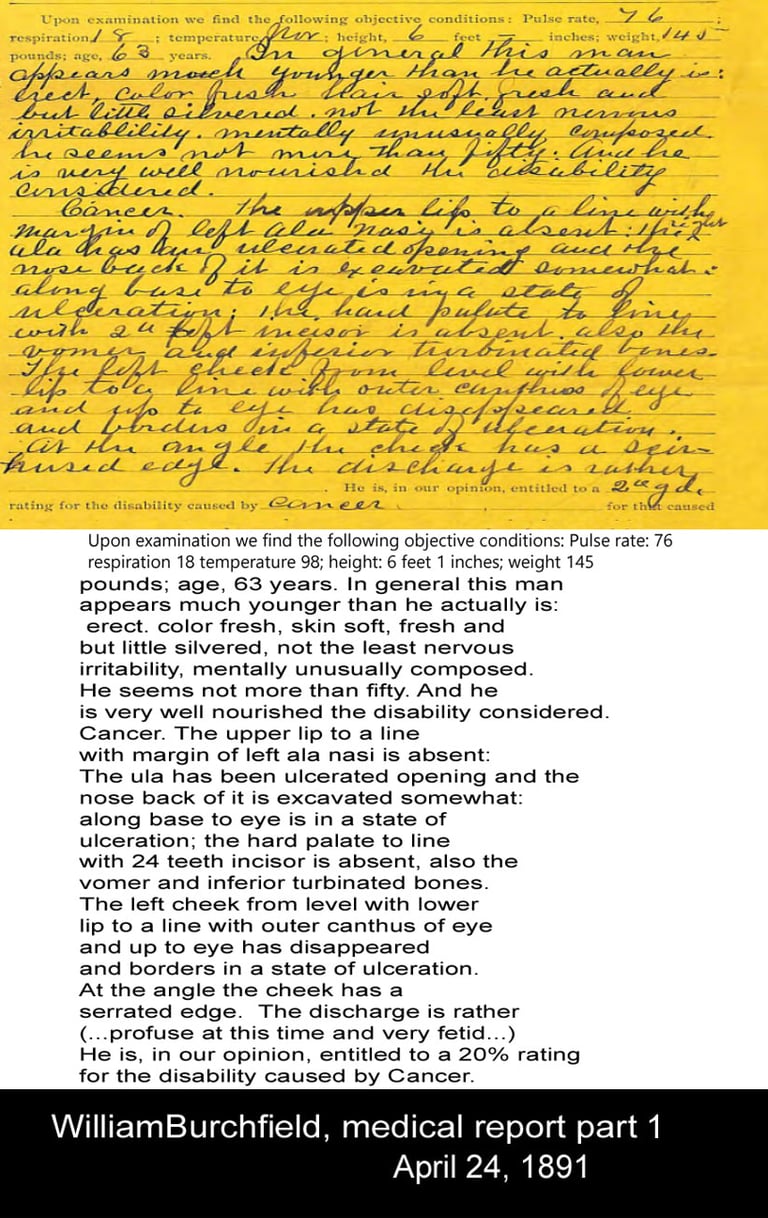
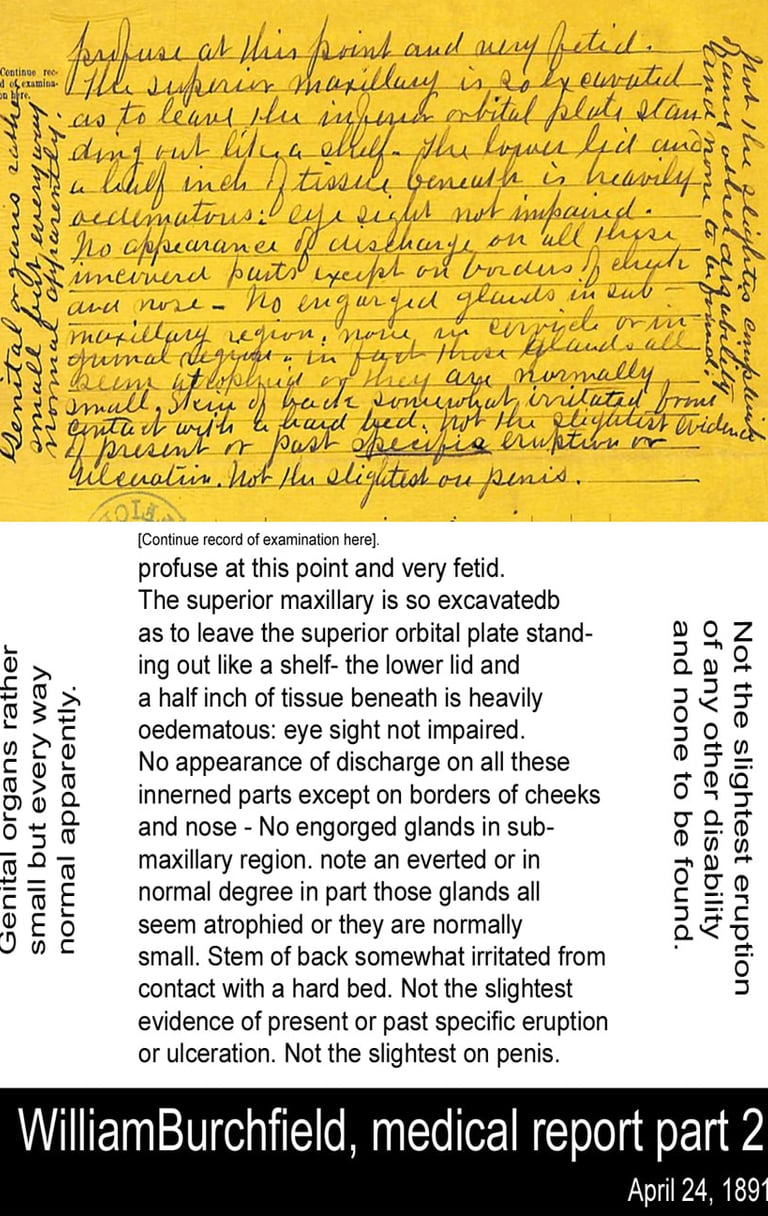
In his later years, tragedy struck: William was diagnosed with terminal cancer. On July 22, 1890, he applied for a military pension to provide for his family. His condition was so severe that he could not appear for testimony; his doctor submitted an affidavit dated April 24, 1891, stating that travel would create a "Danger to his life, by reason of exhaustion and danger of imminent hemorrhage." This poignant evidence helped secure approval—William was awarded $12 per month, retroactive to his application date.
William Burchfield passed away from cancer on September 7, 1892. His pension file, preserved in the National Archives (public domain PDF available), stands as a quiet testament to the sacrifices of everyday veterans and the support systems that aided their survivors.