The story of how one young soldier became a witness and participant in one of the most troubling episodes in Minnesota history.
Andrew Ryan McGill and the Mankato Execution of 1862
When twenty-two-year-old Andrew Ryan McGill enlisted in Company D of the Ninth Minnesota Volunteer Infantry on August 19, 1862. His military service placed him in the midst of a conflict rooted in disputed land, broken promises, hunger, fear, and violence along Minnesota’s western frontier.
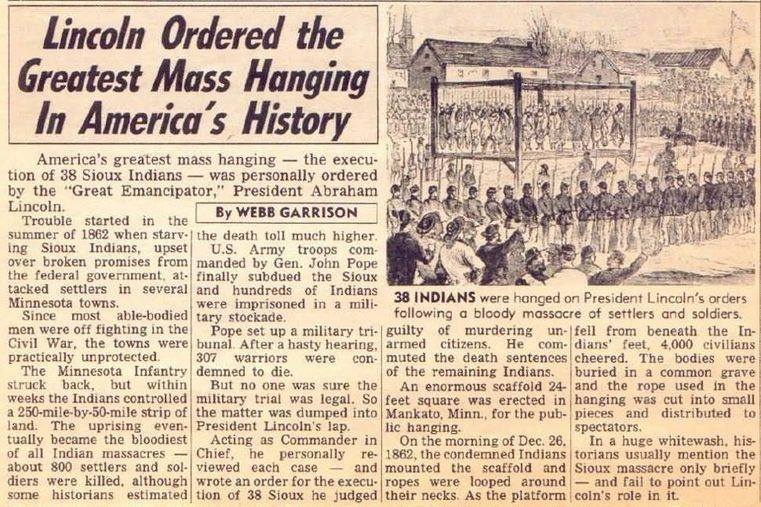
Four months after his enlistment, Andrew was among the soldiers assigned to guard the execution of 38 Dakota men at Mankato, Minnesota. The mass hanging on December 26, 1862, remains the largest single-day mass execution in United States history.
To understand Andrew’s presence there, it is necessary to understand the conflict that brought the condemned men to the scaffold.
The Dakota People and the Loss of Their Land
The Dakota people had lived in the region known to them as Mni Sota Makoce—“the land where the waters reflect the skies”—for generations. During the first half of the nineteenth century, a series of treaties transferred millions of acres of Dakota land to the United States.
In return, the federal government promised payments, goods, food, education, and protected reservation lands. Those agreements were repeatedly altered, delayed, inadequately fulfilled, or undermined by corruption. Traders claimed large portions of treaty payments for debts, while government agents and other officials controlled when and how the remainder reached Dakota communities.
By 1862, the Dakota reservation had been reduced to a narrow strip of land along the Minnesota River. Settlers continued moving into the surrounding country, hunting grounds had diminished, and traditional ways of obtaining food had been disrupted. Many Dakota families had become dependent upon government payments and supplies that did not arrive when promised.
The summer of 1862 brought particularly severe hardship. Crops had failed in some areas, game was scarce, and people were hungry. The annual federal payment was late, while food remained stored in government warehouses. Traders refused to extend further credit.
The Dakota were not united in how they believed these conditions should be confronted. Some favored resistance, while others sought accommodation or feared that war would bring disaster upon their people. Those divisions would continue throughout the conflict. The history cannot be reduced to two uniform sides acting with one purpose. (Minnesota Historical Society)
The U.S.–Dakota War of 1862
On August 17, 1862, four young Dakota men killed five white settlers near Acton Township. Their actions were not apparently part of a previously organized military plan, but the killings forced Dakota leaders to decide what should happen next.
Some believed that war had become inevitable. Under the leadership of Taoyateduta, known to English speakers as Little Crow, Dakota fighters attacked the Lower Sioux Agency on August 18. Fighting quickly spread to settlements and military positions across southwestern Minnesota.
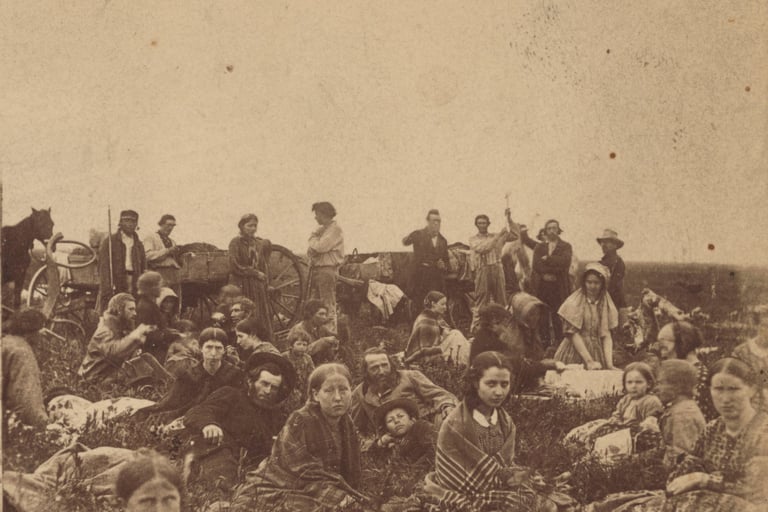
During the following weeks, Dakota fighters attacked farms, towns, and travelers. Hundreds of settlers fled their homes. Civilians—including women and children—were killed, wounded, or taken captive. Soldiers and militia members also died in battles at places such as Redwood Ferry, Fort Ridgely, Birch Coulee, and Wood Lake.
Dakota communities suffered as well. Many Dakota opposed attacks upon civilians and attempted to protect captives. A group sometimes called the Dakota Peace Party worked to end the fighting and release prisoners. Dakota families were divided, displaced, and caught between the United States military and those continuing the war.
The conflict lasted approximately six weeks. On September 23, United States forces under Colonel Henry Hastings Sibley defeated Dakota fighters at the Battle of Wood Lake. Three days later, Dakota leaders who favored peace released 269 captives at a location afterward called Camp Release.
Hundreds of Dakota men surrendered or were taken into military custody. Others, including Little Crow, fled westward. The immediate fighting had ended, but punishment of the Dakota people was only beginning. (Minnesota Historical Society)
The Military Trials
A military commission was established to determine which Dakota prisoners had participated in the war. Between September 28 and November 5, 1862, the commission tried 392 men.
The proceedings moved with extraordinary speed. Some trials lasted only a few minutes. Defendants generally had no attorneys, often did not fully understand the proceedings, and had little opportunity to present evidence or question witnesses. Participation in a battle was not always clearly separated from participation in attacks upon civilians.
Of the 392 men tried:
303 were sentenced to death.
16 received prison terms.
The remaining defendants were acquitted or otherwise released from the commission’s jurisdiction.
The sheer number of death sentences created a question that only the president could resolve. Because the trials had been conducted by a military commission, the executions required federal approval. (Minnesota Historical Society)
Abraham Lincoln Reviews the Cases
Minnesota officials and many settlers demanded that all 303 condemned men be executed. President Abraham Lincoln faced intense pressure at a time when the nation was already consumed by the Civil War.
Lincoln requested the trial records and directed that the cases be reviewed. He initially sought to distinguish between men convicted of participating in battles and those found guilty of attacks upon civilians. He also ordered further examination of cases involving the abuse of female captives.
After reviewing the evidence, Lincoln approved the executions of 39 men, reducing the original 303 death sentences by 264.
His decision angered many Minnesotans, who believed far more of the prisoners should die. Lincoln later explained that he was unwilling to order executions merely to satisfy public demands for retaliation.
Shortly before the scheduled hanging, one of the 39 men received a reprieve after doubt arose about the evidence against him. The final number condemned to die was 38. (Minnesota Historical Society)
The Execution at Mankato
The condemned men were imprisoned at Mankato, where a large square scaffold was constructed to allow all 38 to be hanged simultaneously.
Authorities feared serious disorder. Public anger remained intense, and mobs had already threatened and attacked Dakota prisoners during forced movements through Minnesota. A large military presence was assembled to prevent civilians from seizing the prisoners and to maintain control over the crowd.
On the morning of December 26, 1862, thousands of spectators gathered in Mankato. Soldiers formed security lines around the prisoners, the scaffold, and the surrounding streets.
The 38 Dakota men were brought from the prison and placed upon the scaffold. Many sang a Dakota death song and attempted to maintain contact with one another as ropes were placed around their necks. Shortly after 10:00 a.m., a signal was given and the platform dropped beneath them.
All 38 died together.
The execution remains the largest single-day mass execution carried out under United States authority. Today, Reconciliation Park in Mankato stands near the site, commemorating the men who died and acknowledging the lasting consequences of the U.S.–Dakota War. (Minnesota Historical Society)
Imprisonment and Exile
The hanging was not the end of the government’s punishment.
Many of the Dakota men whose death sentences had not been approved remained prisoners. Some were later sent to a military prison at Davenport, Iowa.
Approximately 1,600 Dakota people—primarily women, children, and elderly people—were forced to march to a separate internment camp on the river flats below Fort Snelling, near present-day St. Paul. Along the route, they faced abuse and attacks from angry civilians.
The Fort Snelling camp was geographically separate from the Mankato prison and execution site. The soldiers guarding the Mankato execution were therefore not simultaneously guarding the Dakota families confined at Fort Snelling.
Disease, exposure, inadequate food, and poor sanitation made conditions in the camp deadly. Estimates vary, but at least 100—and perhaps several hundred—Dakota people died during the winter.
In 1863, Congress abolished the Dakota reservations in Minnesota, declared the treaties with the Dakota void, and authorized their removal from the state. Most of the surviving prisoners and families were eventually transported to reservations outside Minnesota, including Crow Creek in present-day South Dakota.
The punishment thus extended far beyond the men who had taken part in the fighting. Dakota people who had opposed the war, protected captives, or played no role in the conflict were also dispossessed and expelled. (Minnesota Historical Society)
Andrew Ryan McGill Among the Guard
Andrew Ryan McGill enlisted in Captain Asgrim K. Skar’s Company D of the Ninth Minnesota Volunteer Infantry on August 19, 1862—one day after the attack on the Lower Sioux Agency marked the beginning of the wider conflict.
Although he enlisted as a private, Andrew was selected to serve as the company’s first sergeant, the highest-ranking enlisted position within the company. A first sergeant ordinarily helped form and account for the men, transmitted officers’ instructions, maintained discipline, and supervised the company’s daily activities.
Instead of immediately joining Civil War operations in the South, Company D remained in Minnesota for frontier service. An early biographical account of Andrew states that he was posted at St. Peter and was “present as a guard at the hanging of the condemned Sioux at Mankato.”
That statement establishes his presence as part of the military guard on December 26, 1862. It does not tell us exactly where he stood or what individual duty he performed. There is presently no evidence that Andrew worked the scaffold, handled one of the prisoners, or took part in deciding who would be executed.
His company’s responsibility was security. The soldiers were there to control the enormous crowd, maintain order, prevent mob violence, and ensure that the government’s sentence was carried out.
Andrew was twenty-two years old, newly enlisted and serving under military orders. He did not negotiate the treaties that preceded the conflict. He did not conduct the trials, review the convictions, select the condemned men, or order their deaths.
Yet he was not entirely removed from what occurred.
As first sergeant of a company assigned to the guard, Andrew was part of the armed force that made the execution possible. He stood somewhere within the military perimeter while 38 men were taken to the scaffold and hanged before thousands of spectators.
This does not require that his life be judged by one assignment performed during his first months as a soldier. Nor should the event be omitted because it is difficult to reconcile with the later life of a respected lawyer, public official, and governor.
It is part of his history.
At twenty-two, Andrew Ryan McGill became a witness and participant in one of the most troubling episodes in Minnesota history—an episode shaped by violence against settlers, years of injustice toward the Dakota people, deeply flawed trials, public demands for retaliation, and the power of the United States government brought down upon both the guilty and the innocent.
The surviving record does not tell us what Andrew thought as he stood guard that December morning. It tells us only that he was there. (Ramsey County Historical Society)